School Choice
Traditional Schools Lost 33,300 Students. The State Totals Hid It.
Oklahoma's headline enrollment dipped just 0.9% since 2016. Strip out virtual charters and the picture is five times worse.
Sooner State Education Coverage, Driven by Data
Page 2 of 2
Oklahoma's headline enrollment dipped just 0.9% since 2016. Strip out virtual charters and the picture is five times worse.
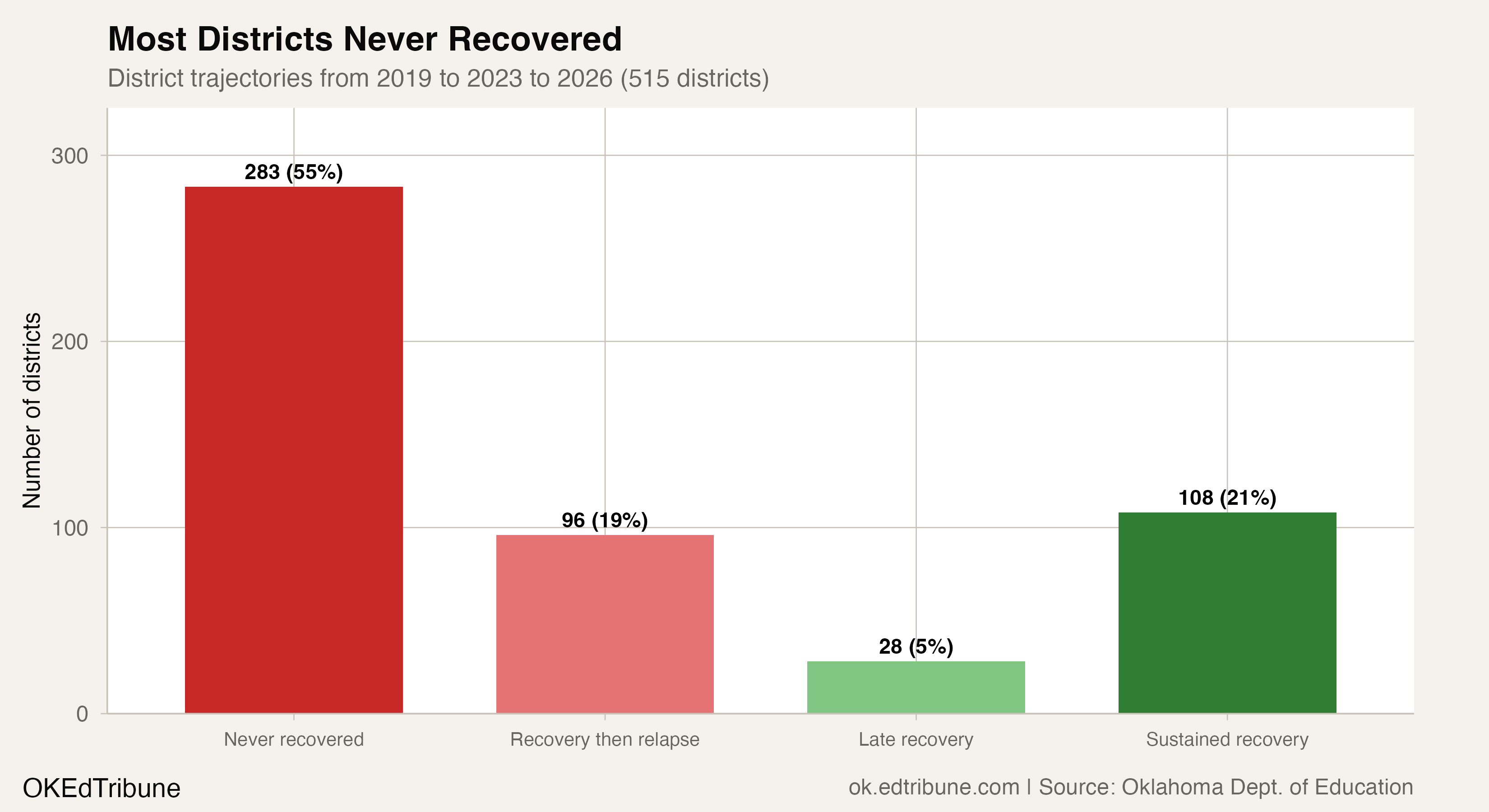
Five years after the pandemic, only 136 of 515 Oklahoma districts have recovered to 2019 levels. The state's brief rebound masked a deeper structural decline.
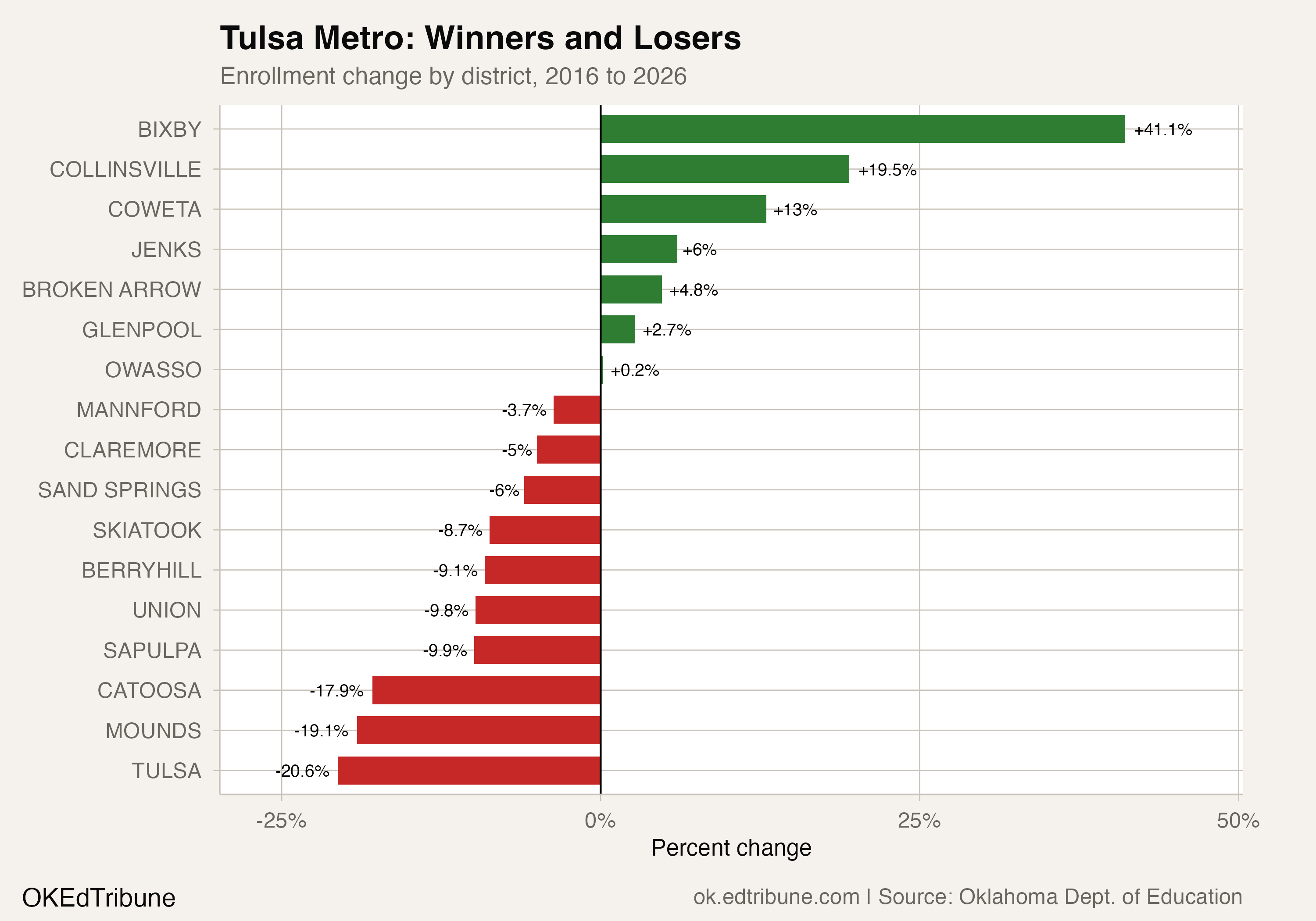
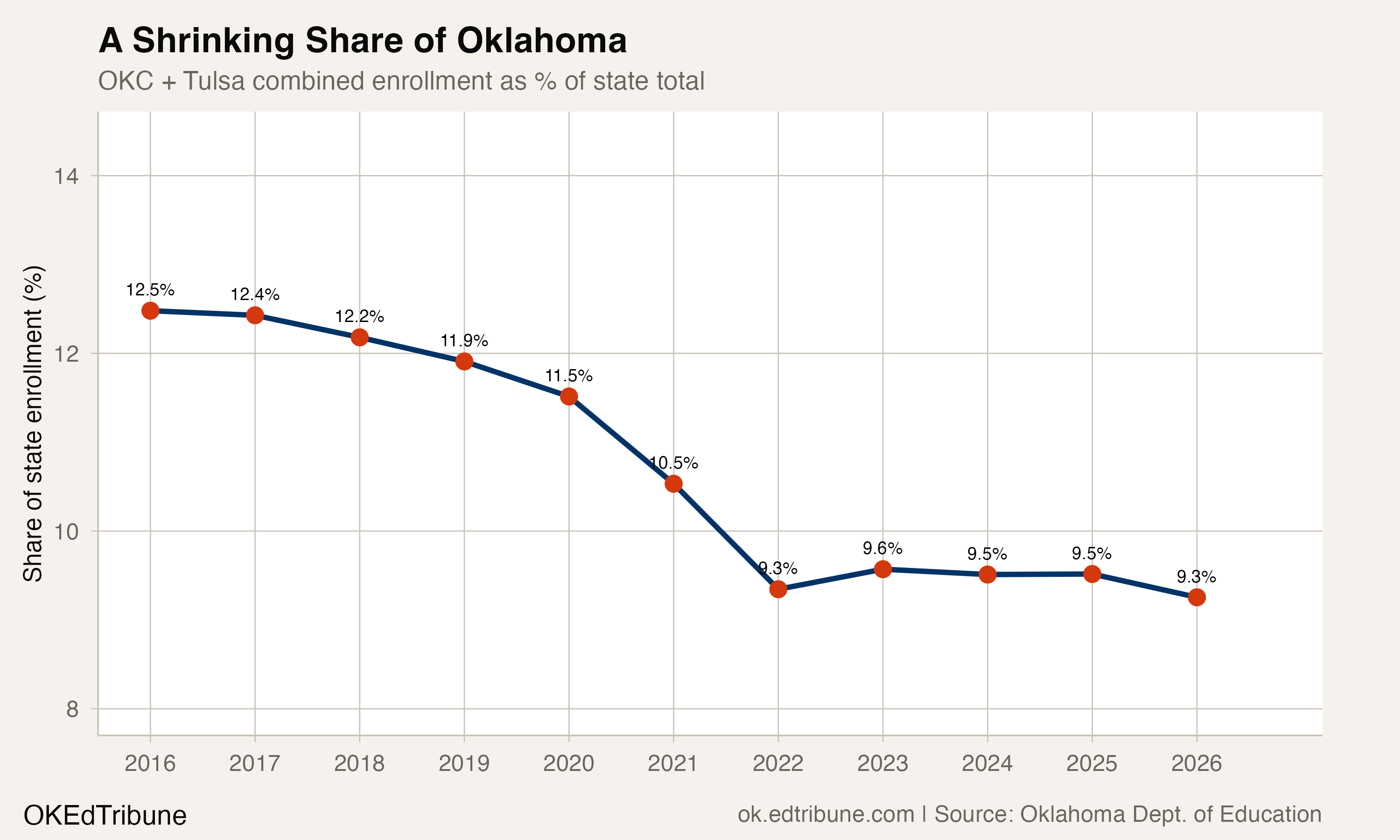
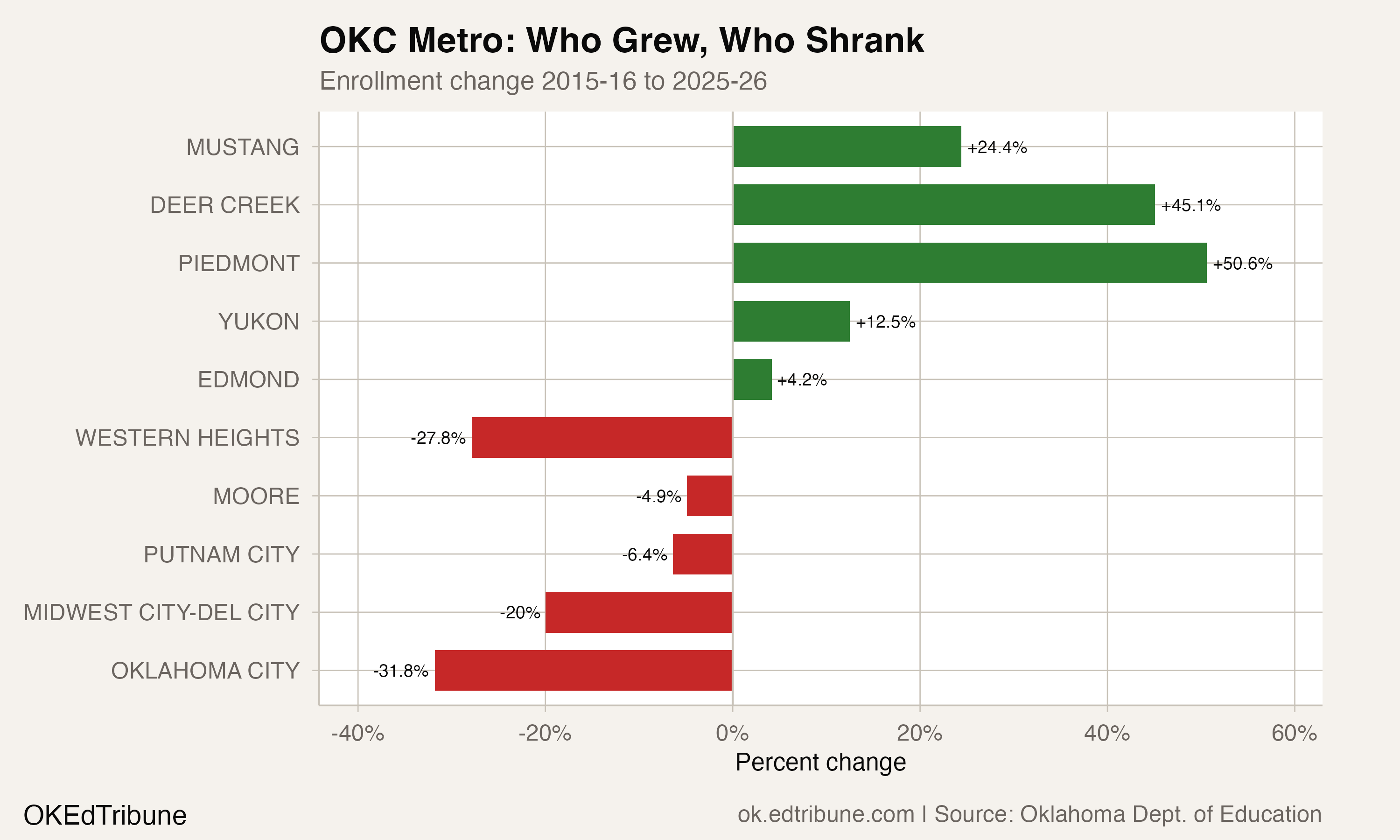
Tulsa Public Schools has shed 8,417 students since 2016. The suburbs ringing it have absorbed thousands, creating a metropolitan donut pattern that is reshaping school funding across the region.
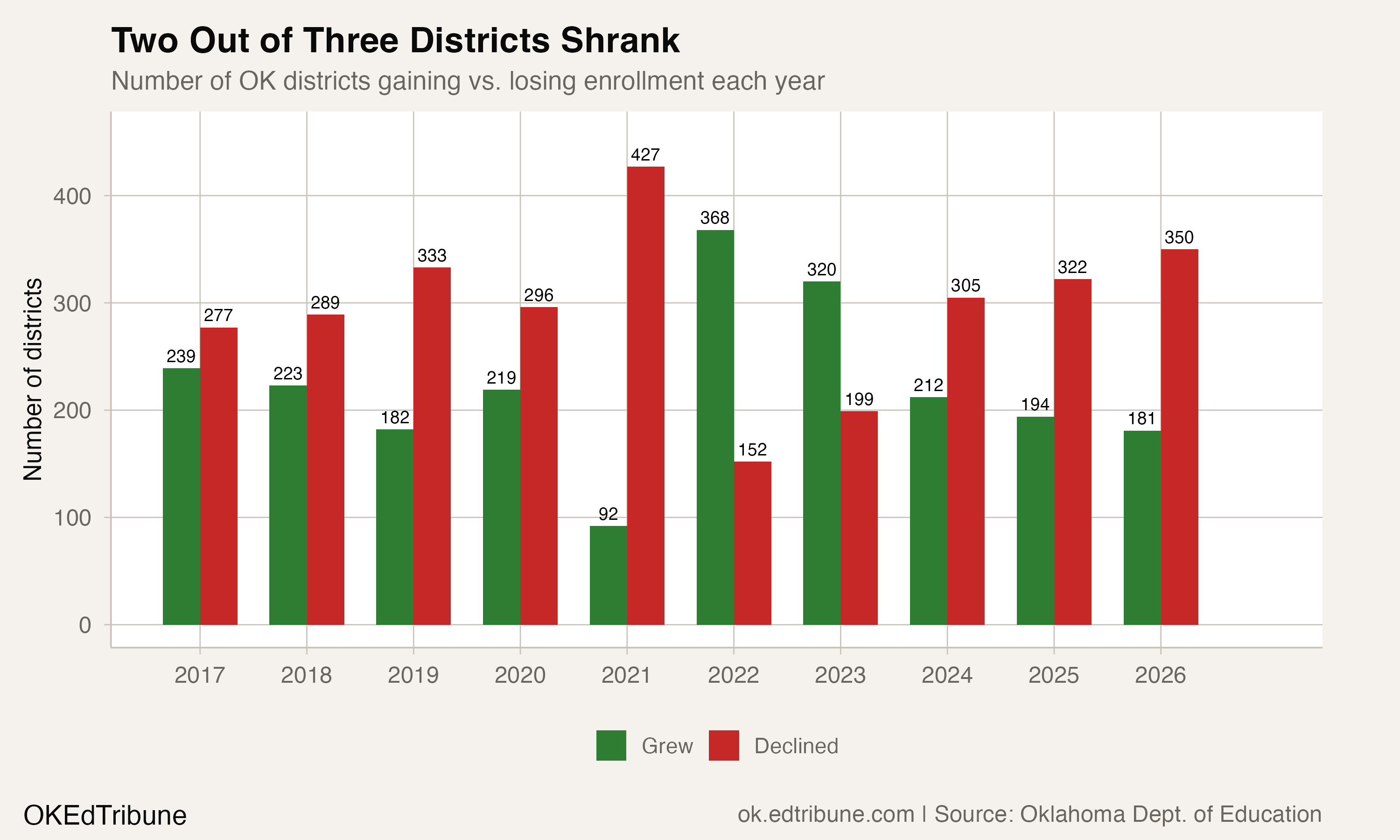
350 of 539 Oklahoma districts shrank in 2025-26, the broadest non-COVID decline on record, with losses distributed far beyond the largest urban systems.
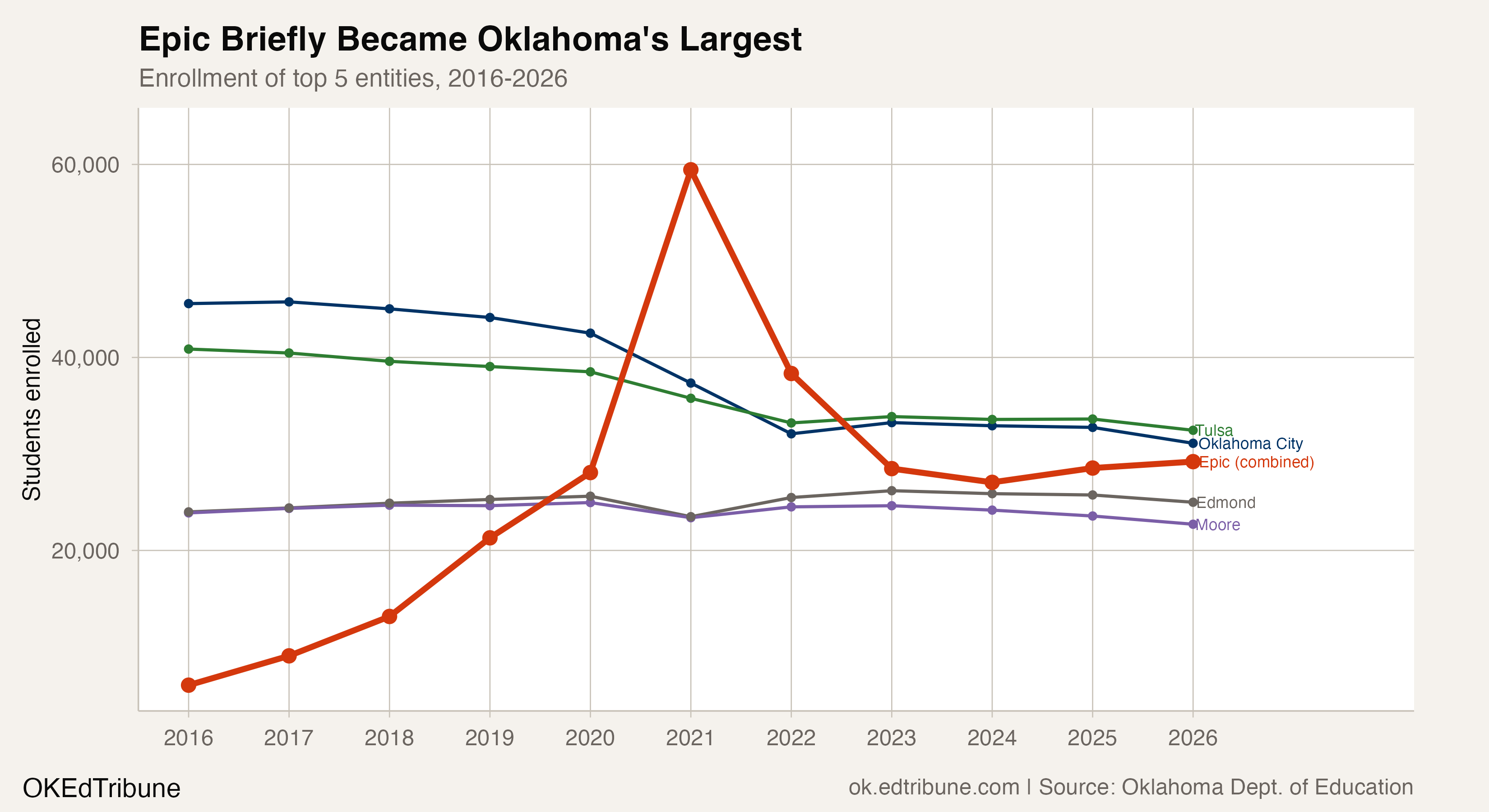
Tulsa quietly overtook Oklahoma City in 2022 as the state's largest school district. The lead has widened to 1,346 students, but both are shrinking.
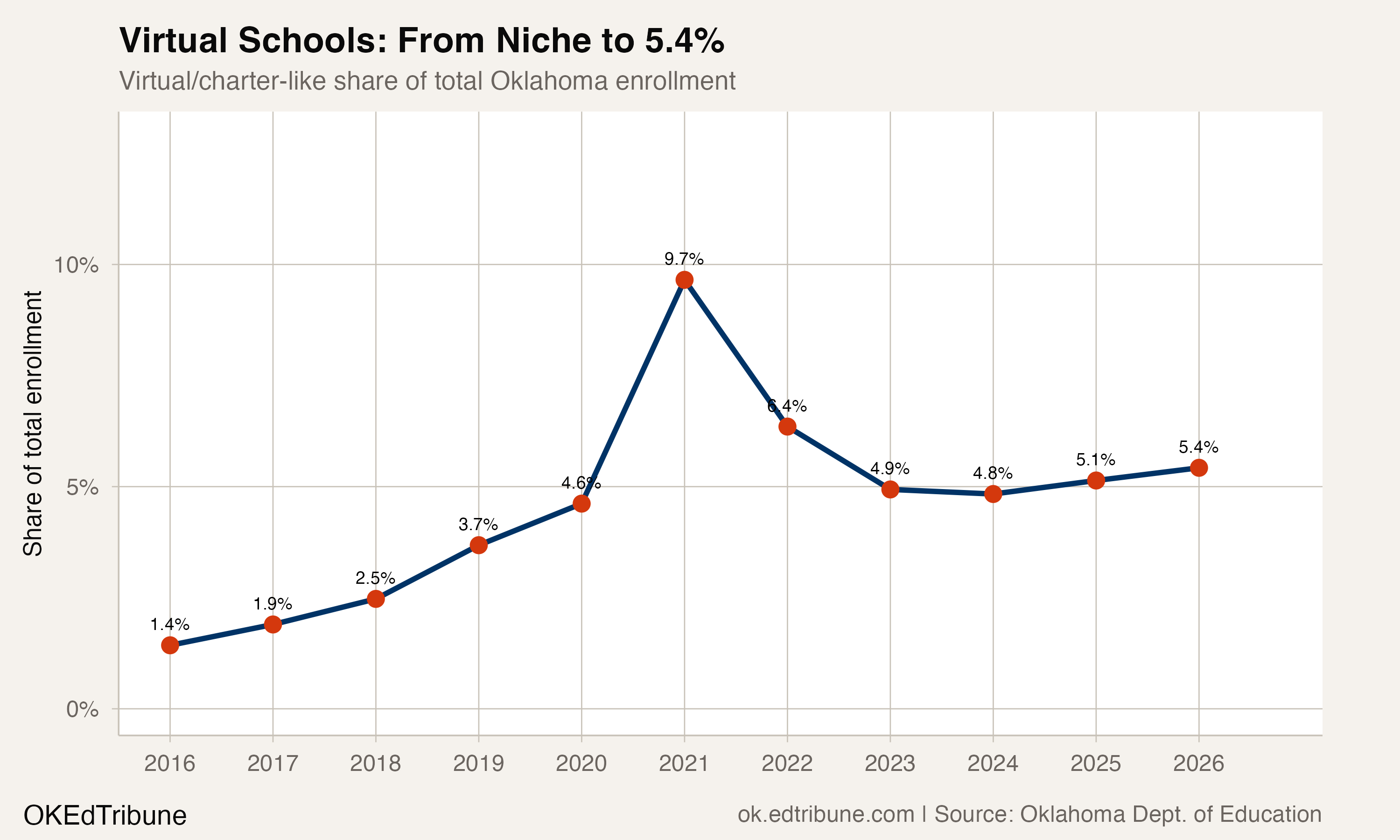
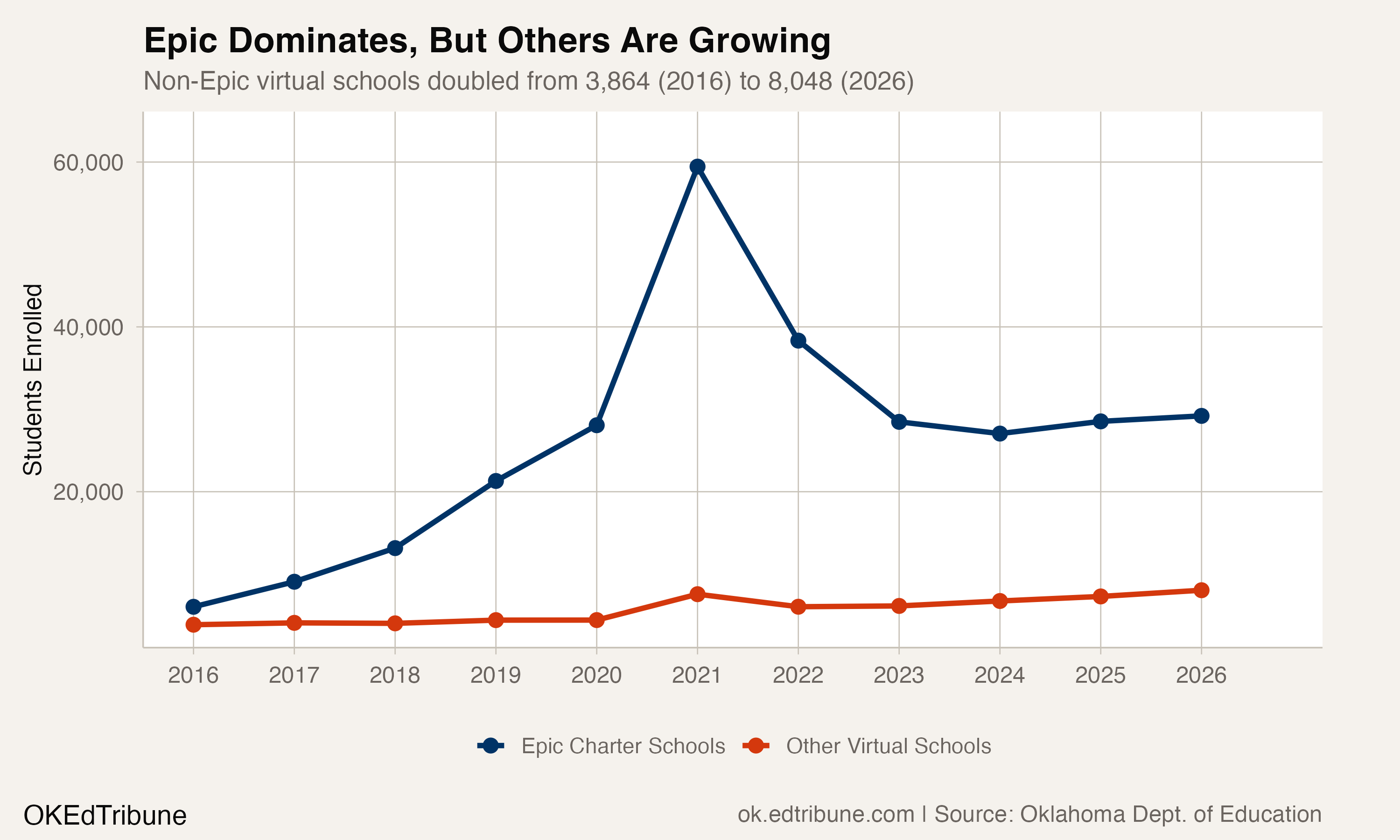
Seven virtual charter schools serve 37,249 students, 5.4% of statewide enrollment. The sector nearly quadrupled in a decade and claims 1 in 10 high schoolers.
Oklahoma enrolled 3,533 fewer kindergartners than 12th graders in 2025-26, a first in at least a decade. The inversion locks in years of continued decline.

OKCPS dropped from 45,577 to 31,104 students since 2016, losing its No. 1 ranking to Tulsa and closing 32 campuses as virtual charters and suburbs absorbed families.
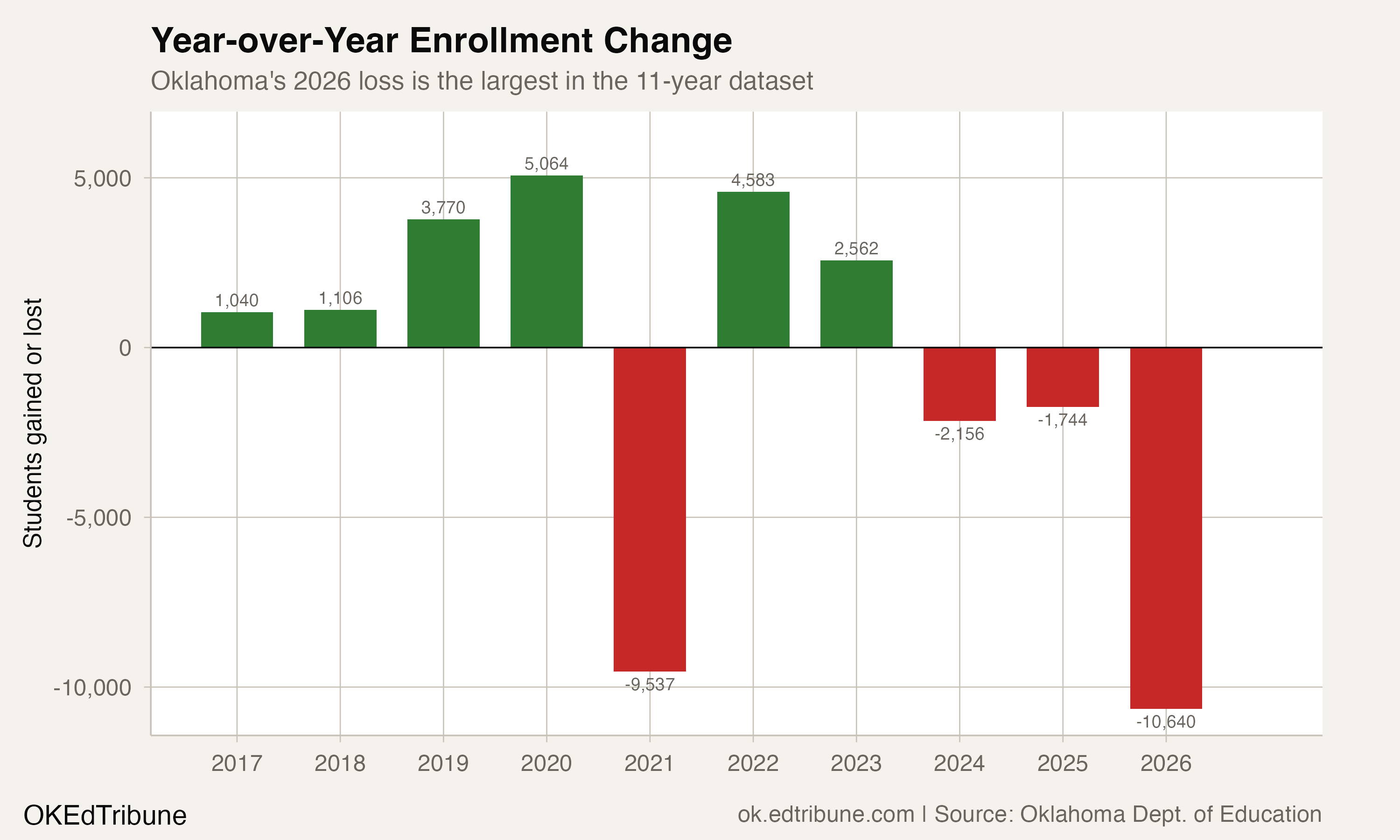
Oklahoma's 10,640-student drop in 2025-26 is the largest single-year loss in the dataset, surpassing the pandemic. The state is now 7,395 students below its COVID floor.
Epic Charter Schools grew from 6,037 students to 59,445 in five years, becoming Oklahoma's largest district. Then came the scandal, the collapse, and 500 layoffs.
OSDE releases 2025-26 enrollment data showing 686,718 students statewide — down 10,640, the largest single-year loss on record.